

I find it fascinating how something we enjoy so much can be, in reality, a defence mechanism.
Chilli is not “made for flavour.”
It is a toxin.
The plant produces capsaicin to protect itself from being eaten. It is a survival strategy. When a predator bites into it, the burning sensation is not taste — it is a warning signal. Pain receptors are activated. The body reacts as if it is under attack.
And yet… we eat it on purpose.
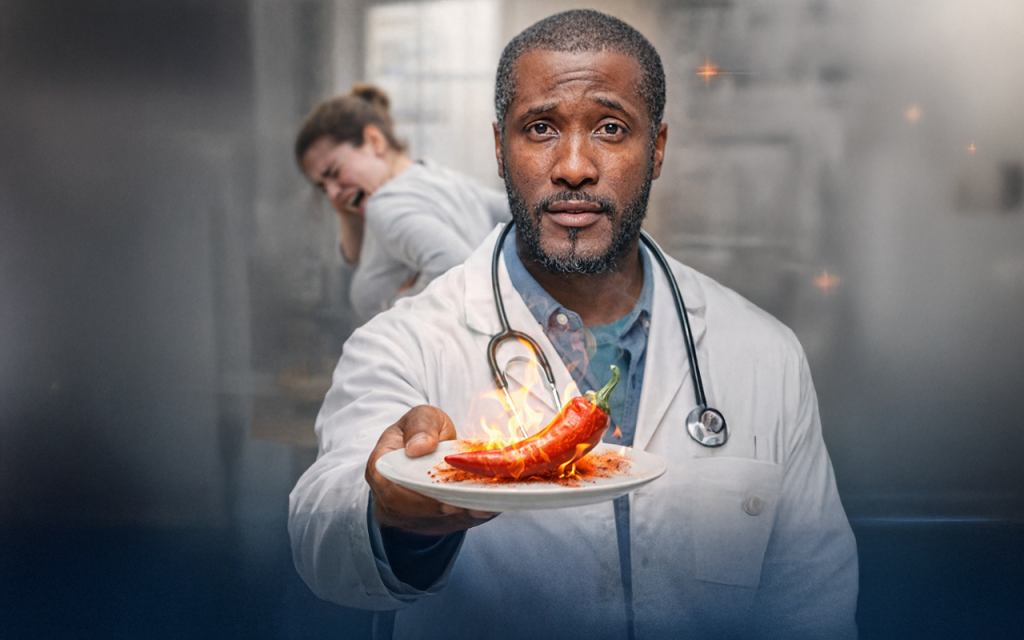
Humans are one of the few species that willingly consume this toxin. Not because the body needs it, but because of what happens after. The nervous system releases endorphins and dopamine in response to the irritation, creating a strange cycle where pain turns into pleasure.
But just because the body can tolerate something, it does not mean it is beneficial — especially during recovery.
This is where most people get it wrong.
During a healing process, your body is working with limited resources. The immune system is active. Tissues are repairing. Inflammation needs to be controlled, not stimulated.
Capsaicin, even in small amounts, activates pain pathways and inflammatory responses. Studies from institutions like Harvard Medical School have shown that it stimulates specific receptors linked to inflammation and nerve activation before any form of adaptation occurs.
In a healthy person, this may not be a problem.
But if you are already dealing with pain, tissue damage, or chronic inflammation, every small interference matters.
Healing is not just about what you add — treatments, therapies, exercises.
It is also about what you stop.
Because recovery is a delicate process. The body is trying to restore balance. And when you keep introducing small stressors, even ones that seem harmless, you slow that process down.
Most people never think about this.
They focus on treatment, but ignore daily habits that quietly interfere with results.
And then they wonder why progress is slow.
The reality is simple.
When your body is trying to heal, efficiency matters more than tolerance.
You are no longer in a state where you can “get away” with things.
You are in a state where everything counts.
This is why avoiding inflammatory inputs — including spicy foods — becomes important during recovery.
Not because they are dangerous.
But because they are unnecessary.
And when you are trying to recover from pain, unnecessary stress is something your body simply does not need.
Because at the end of the day, the real goal is not just to cope with pain.
It is to remove everything that stands in the way of healing.
And that is where real recovery begins.
Go ahead and read what our patients have shared about their treatments: