

What Is Carpal Tunnel Syndrome?
Have you ever woken up with a numb hand? Or struggled to grip a coffee mug, type on a keyboard, or button your shirt because your fingers felt weak or tingling?
If so, you may be suffering from Carpal Tunnel Syndrome (CTS)—one of the most common nerve compression conditions affecting the hand and wrist.
Carpal Tunnel Syndrome occurs when the median nerve, which runs from your forearm into your hand, becomes compressed as it passes through a narrow passage in the wrist called the carpal tunnel.
Think of the carpal tunnel as a tunnel under a bridge. If the tunnel becomes crowded because the surrounding tissues swell, the nerve gets squeezed. Just like stepping on a garden hose restricts the flow of water, pressure on the median nerve interferes with the normal signals travelling between your brain and your hand.
The result is pain, numbness, weakness, and loss of hand function.
Where Is the Carpal Tunnel?
The carpal tunnel is located on the palm side of your wrist.
It is formed by:
- The wrist bones (carpal bones), which create the floor and sides.
- A strong ligament called the transverse carpal ligament, which forms the roof.
Inside this narrow space pass:
- The median nerve.
- Nine flexor tendons responsible for bending your fingers and thumb.
Because the space is very limited, even a small amount of swelling can place significant pressure on the median nerve.
What Causes Carpal Tunnel Syndrome?
Carpal Tunnel Syndrome rarely has a single cause. More often, it develops from a combination of factors that gradually increase pressure inside the tunnel.
Common causes include:
Repetitive Hand Movements
People who spend long hours:
- Typing
- Using a mouse
- Working on production lines
- Using vibrating tools
- Performing repetitive manual work
may overload the tendons inside the tunnel.
Inflammation
Inflamed tendons occupy more space inside the tunnel, leaving less room for the nerve.
Inflammation may occur due to:
- Tendon overuse
- Arthritis
- Previous injuries
- Autoimmune conditions
Wrist Injuries
A fracture or severe sprain may alter the normal anatomy of the wrist, reducing the available space for the median nerve.
Medical Conditions
Certain health conditions increase the likelihood of developing Carpal Tunnel Syndrome, including:
- Diabetes
- Rheumatoid arthritis
- Hypothyroidism
- Pregnancy (temporary fluid retention)
- Obesity
Poor Wrist Position
Maintaining the wrist in a bent position for prolonged periods—particularly during computer work or sleep—can increase pressure inside the carpal tunnel.
Common Symptoms
Symptoms usually begin gradually and become more frequent over time.
The most common symptoms include:
- Tingling in the thumb, index, middle and half of the ring finger.
- Numbness during the night.
- Pain that travels into the forearm.
- Weak grip strength.
- Difficulty holding small objects.
- Frequently dropping items.
- Burning or electric-shock sensations in the fingers.
- Hand weakness, especially when pinching.
Many patients notice that shaking the hand temporarily relieves the symptoms.
As the condition progresses, numbness may become constant and muscle wasting can develop at the base of the thumb.
How Is Carpal Tunnel Syndrome Diagnosed?
A thorough assessment is essential because not every numb hand is caused by Carpal Tunnel Syndrome.
Neck problems, nerve irritation higher up the arm and other neurological conditions can produce similar symptoms.
A proper diagnosis usually includes:
- A detailed medical history.
- Clinical examination.
- Specific nerve tension tests.
- Grip strength assessment.
- Sensory testing.
- Ultrasound or MRI in selected cases.
- Nerve conduction studies when confirmation is required.
The goal is to identify not only that the nerve is compressed, but also why it has become compressed.
Treatment Options
Treatment depends on:
- The severity of the compression.
- How long symptoms have been present.
- Whether permanent nerve damage has started.
The earlier treatment begins, the better the outcome.
1. Activity Modification
For very mild cases, reducing repetitive strain and improving workstation ergonomics may allow the irritated tissues to settle.
Average recovery:
4–8 weeks.
2. Wrist Splints
Night splints keep the wrist in a neutral position while sleeping, reducing pressure on the median nerve.
They are most effective in early or mild cases.
Average recovery:
6–12 weeks.
3. Physiotherapy
A personalised rehabilitation programme may include:
- Nerve gliding exercises
- Tendon gliding exercises
- Soft tissue treatment
- Joint mobilisation
- Strengthening exercises
- Postural correction
- Ergonomic advice
The goal is to improve movement, reduce pressure on the nerve and restore normal hand function.
Average recovery:
6–12 weeks.
4. Shockwave Therapy
In selected patients, shockwave therapy may help reduce pain, improve circulation and stimulate tissue healing around irritated soft tissues.
It is often used alongside a comprehensive rehabilitation programme rather than as a standalone treatment.
Average recovery:
4–10 weeks, depending on severity and the underlying cause.
5. Ultrasound Therapy
Therapeutic ultrasound may help reduce inflammation and improve tissue healing when used as part of a broader treatment plan.
Average recovery:
4–8 weeks.
6. Corticosteroid Injection
A steroid injection can reduce inflammation around the median nerve and provide temporary symptom relief.
However, it does not correct the underlying mechanical cause, and symptoms may return over time.
Average recovery:
Relief often begins within a few days and may last from several weeks to several months.
7. Carpal Tunnel Release Surgery
When symptoms are severe, long-standing or associated with muscle weakness, surgery may be recommended.
The procedure involves cutting the transverse carpal ligament to create more space for the median nerve.
Most patients experience significant symptom improvement, although nerve recovery depends on how long compression has been present before surgery.
8. Shockwave Therapy
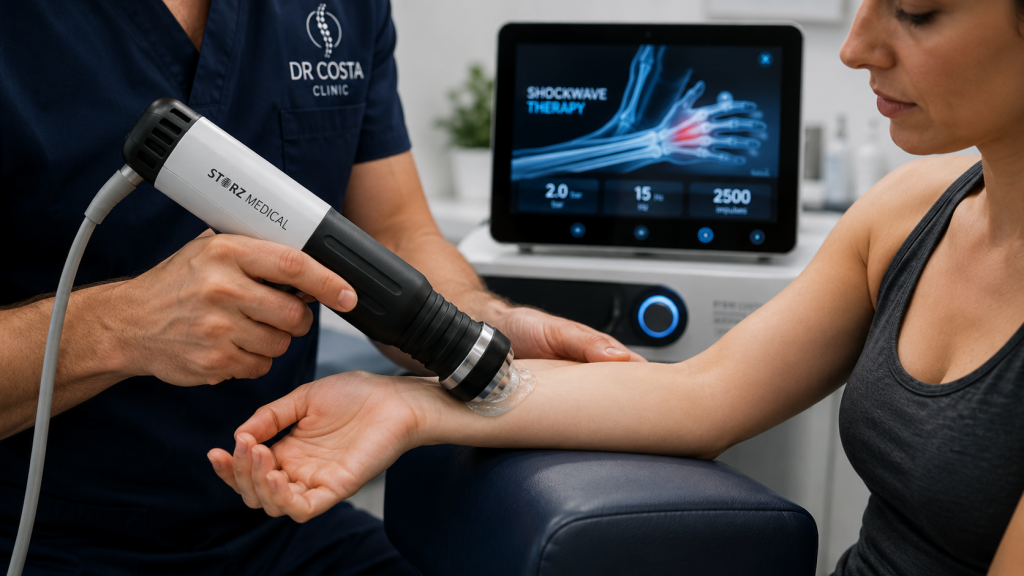
Shockwave Therapy is an advanced, non-invasive treatment that uses high-energy acoustic waves to stimulate the body’s natural healing response. For patients with mild to moderate Carpal Tunnel Syndrome, it may help reduce pain, improve circulation, decrease inflammation, and encourage tissue repair around the compressed median nerve.
Unlike painkillers, which only mask symptoms, Shockwave Therapy aims to improve the health of the affected tissues and create a better environment for nerve recovery. Many patients notice a reduction in pain and tingling after just a few sessions, especially when treatment is combined with activity modification, rehabilitation exercises and correction of the underlying mechanical factors contributing to the condition.
Treatment typically takes 10–15 minutes per session, with 4–6 weekly sessions recommended for most patients. While results vary depending on the severity and duration of symptoms, many people experience significant improvement within 4–8 weeks, allowing them to return to work and daily activities with less pain and better hand function.
Average recovery:
- Light daily activities: 2–4 weeks
- Office work: 4–6 weeks
- Manual work: 8–12 weeks
- Full nerve recovery: 6–12 months in some patients
Can Carpal Tunnel Syndrome Be Prevented?
Although not every case is preventable, you can reduce your risk by:
- Taking regular breaks from repetitive tasks.
- Keeping your wrists in a neutral position.
- Improving your workstation setup.
- Strengthening your hands and forearms.
- Managing medical conditions such as diabetes.
- Seeking early assessment when symptoms first appear.
Ignoring numbness and tingling may allow permanent nerve damage to develop.
When Should You Seek Professional Help?
If your symptoms:
- Wake you at night.
- Persist for more than a few weeks.
- Cause weakness or loss of grip.
- Interfere with work or daily activities.
- Continue despite rest.
it is important to have your wrist properly assessed.
Early diagnosis often means simpler treatment, faster recovery and a much lower risk of permanent nerve damage.
At Dr Costa Clinic, every assessment is designed to uncover the true source of your symptoms—not simply mask them. Through a detailed clinical examination and advanced technology, we identify why the median nerve is under pressure and create a personalised treatment plan aimed at restoring normal function, reducing pain and helping you return to the activities you enjoy.